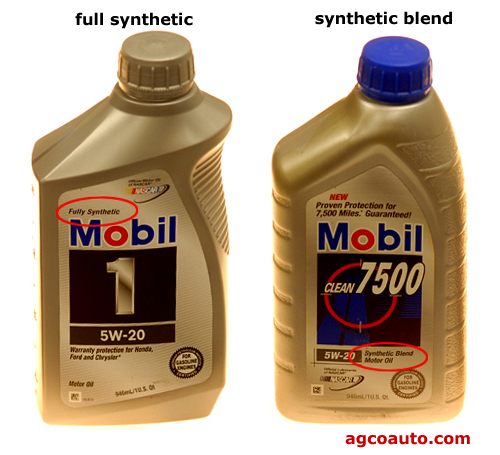
There are two things most people know about synthetic oil. First, it cost a lot and second, it is man made in laboratories and better than conventional oil. The first might be so and the second might not. There is a great amount of mis-information on synthetic oil. The truth is, synthetic oil is NOT for everyone.
Some synthetic oils are man made and not based on petroleum. For instance they may have a polyalpha olefin (PAO) base. This is pretty straight forward and what most people have come to consider synthetic. However, the term synthetic does not have a standardized meaning. It has been decided (Mobil Oil Verses Castrol) the term synthetic describes properties of a lubricant and not what it is made of. Because of this, several companies market their products as synthetic, even though they are actually petroleum.
Oil labeled as synthetic simply means it has certain properties. As a general rule, synthetic oil will lubricate better, resist viscosity shear and heat better than conventional oil. This makes it desirable in high performance and severe duty situations. Many engines today are designed to be run with and require synthetic oil. If this is the case, no other oil should be used. The owner’s manual will usually make this clear.
Starting in 2011, all General Motors vehicles must use oil that meets their dexos specification or void their engine warranty. While dexos is not the same as synthetic it is doubtful any non-synthetic oil can meet the specification. It is important to realize that not all synthetic oil is licensed as dexos.
Synthetic oil is also compatible with conventional oil. In fact there are synthetic blends available that offer some of the properties of synthetic at a lower price. Many Ford products specify 5W20 synthetic blend.
Vehicles that do not specify synthetic oil can often benefit from its properties. For instance, engines that are used in severe duty. This might be long periods of idling, such as stop and go driving. Not driving a vehicle very much is also considered severe duty. For example if most trips driven are five miles or less. Short trips are very hard on oil and synthetic oil can hold up to these conditions.
People who do not drive under severe conditions and people who drive longer (over ten miles) trips will see much less benefit. Another misconception is that with synthetic oil change intervals can be extended. Synthetic oil cleans even better than conventional oil. This means it will get dirtier. Extending change intervals are false economy. In my opinion, using conventional oil and changing more often is a far better plan.
The chart below may help in selecting the proper oil for your vehicle
Conventional Oil
Synthetic Oil
Primarily longer trips. Average trip driven is ten miles or more.
Primarily shorter trips. Average trip driven is five miles or less.
Driving is a mix of highway and city.
Driving is constant stop and start.
Operating temperatures are moderate 20 to 100 degrees Fahrenheit.
Operating temperatures are extreme below 20 or above 100 degrees Fahrenheit.
Vehicle does not specify synthetic oil.
Vehicle specifies synthetic oil.
Maintenance is well observed, oil is always changed in a timely manner.
Maintenance is not well observed, sometimes oil changes are missed.
Synthetic oil is not required and cost is a concern.
Cost is not a concern and extra protection is desired.
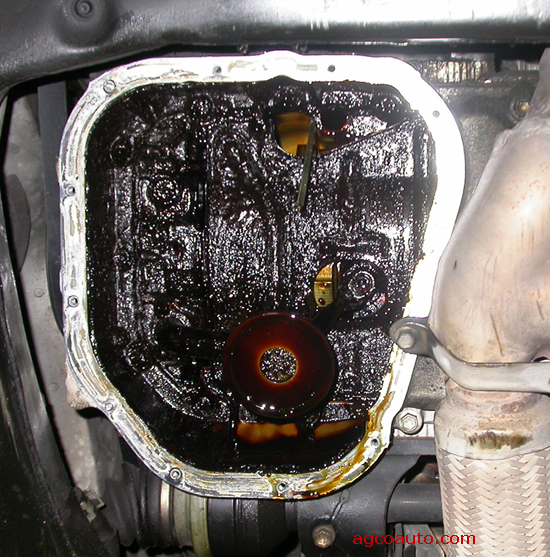
A few final concerns involve higher mileage vehicles that have not been well maintained. Such engines are prone to oil leakage. In some cases, the build up in the crankcase may be disguising leaks. Synthetic oil is an excellent cleaner. It will go to work cleaning any build up. This can reveal oil leaks that did not show up prior to the use of synthetic oil.
I feel another concern could be filter restriction. The oil filter will attempt to remove contaminants broken free by synthetic oil. This could plug the oil filter on older engines with considerable build up. A wise precaution may be to replace the filter, after 1,500 miles and top off the oil. Replace again at each oil change from there forward.
Synthetic oil is a very good product. It is simply not cost effective or required in every case. Should you have further questions, please feel free to contact us. AGCO, it's the place to go!
Registered visitors are always invited to leave their comments and thoughts by using the form above. If you need to you can login here or register here.
You can also win a free AGCO coffee cup, by reporting any errors you find, with this form.