The engine drives several accessories such as the air-conditioning compressor, the alternator and the power steering pump. A pulley, connected to the engine crankshaft, turns these accessories by mean of a belt or belts. Older vehicles use multiple V-belts, named for the cross-sectional shape of the belt. V-belts are rare today and manufacturers use serpentine belts and most designs.
They have so named the serpentine belt because of the way it "snakes" around the engine. One belt often drives several accessories.
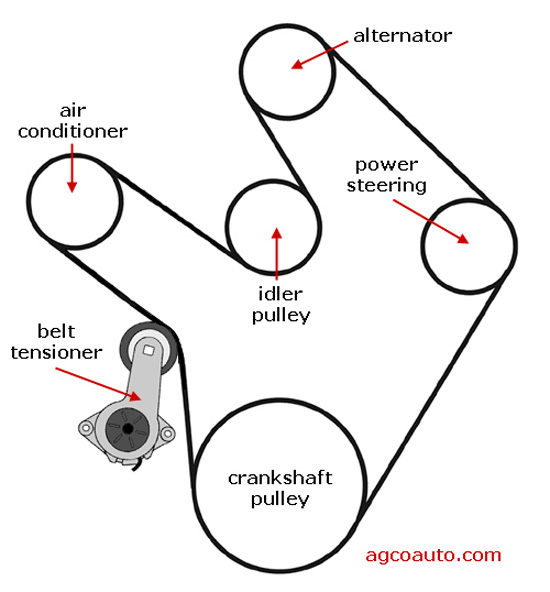
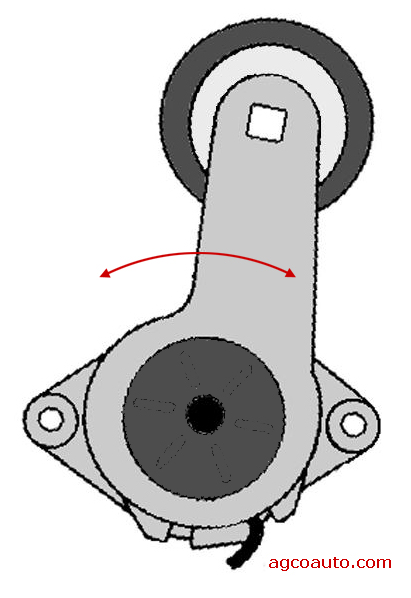
Serpentine belts are normally kept tight by means of a spring loaded belt tensioner. The belt tensioner, has a pulley that contacts the belt and a spring loaded arm applying tension to keep the belt tight. Belt tensioners wear out in time and fail to keep the belt tight. The tensioner pulley also wears and the bearings in them can fail, ruining an otherwise good belt. Best practice is to replace the tensioner when the pulley goes bad.
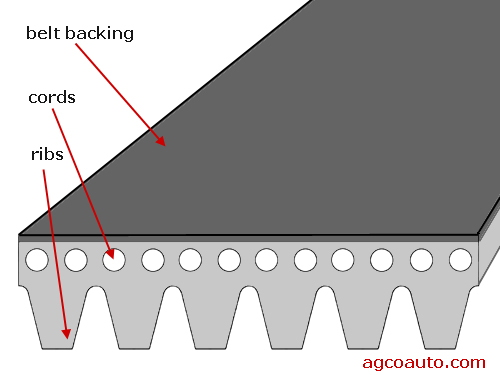
A serpentine belt lasts much longer than the old V-belts. One reason is their thin cross-section makes them far more flexible.
Another reason for the long life of the serpentine belt is the belt tensioner that keeps it in proper adjustment. A typical serpentine belt can last five years or more. They construct most belts today of Ethylene-Propylene-Diene-Monomer or EPDM. The EPDM belt lasts much longer than older neoprene belts.
Inspection is the key to knowing when to replace a worn belt. We should inspect the serpentine belt at least annually or at the sign of a problem. The leading symptom of a problem is a rotational squeak, high-pitched squeal or a chirp noise. These may be most prevalent when the engine is first started.
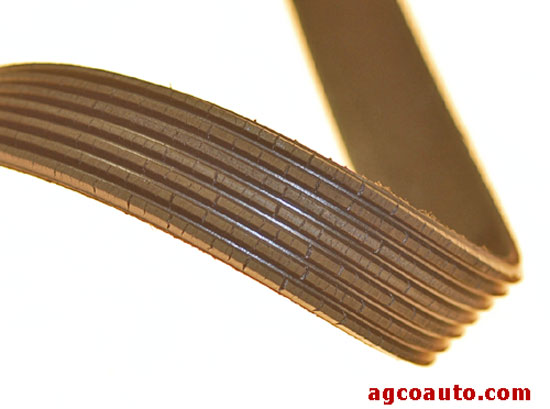
Small cracks in the ribs of the belt do NOT show a need for replacement. These are normal, especially in neoprene belts and do not weaken the belt. Deep cracks to the cord and pieces missing suggests a bad belt. Fraying or separation of the cords from the backing shows a need for replacement of the serpentine belt. This wear also suggests misalignment of the pulleys and possible tensioner failure.

The back of a serpentine belt can also wear. A torn, cracked or separated backing means we should replace the belt.

We should replace any serpentine belts that are seven-years or older, even if they look okay. At this point, the risk will outweigh any future savings. A broken serpentine belt disables the vehicle.
 Squeaking or squealing noise from a belt means a problem
Belts last a lot longer than they used to, often five or more years
A serpentine belt is DIFFERENT FROM a timing belt
For lowest overall costs replace belts that are more than seven years old
Modern EPDM belts will often show no cracks when worn out. Best is to use a special gauge to measure groove wear
If you are not sure about your serpentine belt, have the professionals at AGCO inspect it for you. AGCO, it’s the place to go.