A vacuum brake booster provides power assist to the brake system. As anyone who has experience a booster failure knows, the booster greatly reduces the effort required to stop the vehicle. Brake booster problems misdiagnosed, often set off a series of expensive events.
Vacuum brake boosters may be mysterious to the average person, but are quite simple in operation. The vacuum operated brake booster works much today as it did sixty-years ago. Drawing a vacuum on the front of the diaphragm removes atmospheric pressure. The rear chamber is vented to the atmosphere and the pressure multiplies the force a driver applies with the brake pedal.
Most brake boosters, have two or more chambers, divided by flexible diaphragms. The chamber is normally steel and the diaphragm is usually some form of rubber. They attach a metal push rod to the diaphragms and it moves with them. Vacuum, usually supplied by the engine and atmospheric pressure combine to provide the assistance during braking.
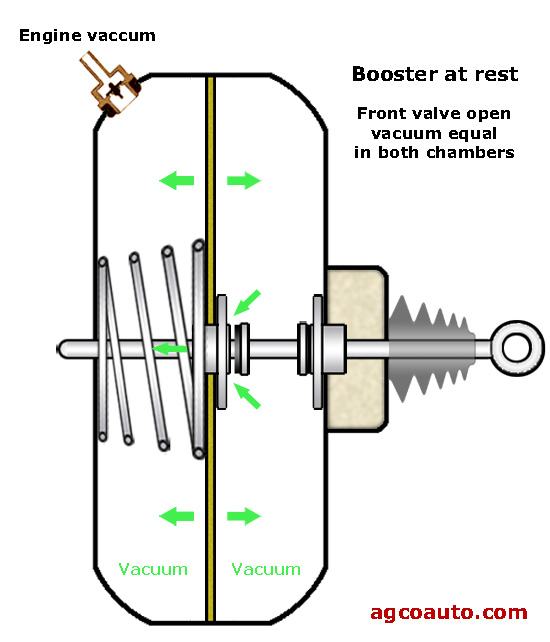
The booster at rest
When we are not applying the brakes, a two-way valve allows vacuum application on both sides of the diaphragm. An equal vacuum on both sides, causes a balance, and the diaphragm remains stationery. In this state we say that the booster is at rest. The shell of the booster acts as a reservoir, to store the engine vacuum. A check valve, in the inlet fitting, helps to maintain a vacuum when the engine accelerates.
Applying the brakes
When we press the brake pedal, the two-way valve also moves. This movement closes the passage to the rear of the diaphragm and vacuum applies only to the front. Simultaneously atmospheric pressure flows into the rear. Atmospheric pressure pushes the diaphragm forward. The push rod also moves to apply the brakes, through the master cylinder, attached to the front of the booster.
Releasing the brake pedal allow the internal spring to push the diaphragm and push rod back and operates the two-way valve. This valve blocks atmospheric pressure to the rear chamber. Simultaneously, it opens the chamber to vacuum. This evacuates the rear chamber and assist in returning the booster to a state of rest.
The system is robust and inherently failure resistant. If the valve, diaphragm or vacuum source fail, they have mechanically connected the push rod to the brake pedal and master cylinder. A damaged system reverts to manual brakes, with no power assist.
Types of failures
Most common booster failures are, a lack of assistance, noise or poor pedal return after release. Often a good booster is mis-diagnosed as bad. Needlessly replacing a good booster often occurs.
To function properly, the brake booster needs a good source of a vacuum. The lack of a vacuum is more common than brake booster failure, when we have no power assist. Collapsed and cracked hoses are most common. Other issues include a plugged vacuum port in the intake and a bad check valve in the inlet. Before replacing a brake booster, we must always test the vacuum source at the brake booster. We do this with a vacuum tee and a vacuum gauge.
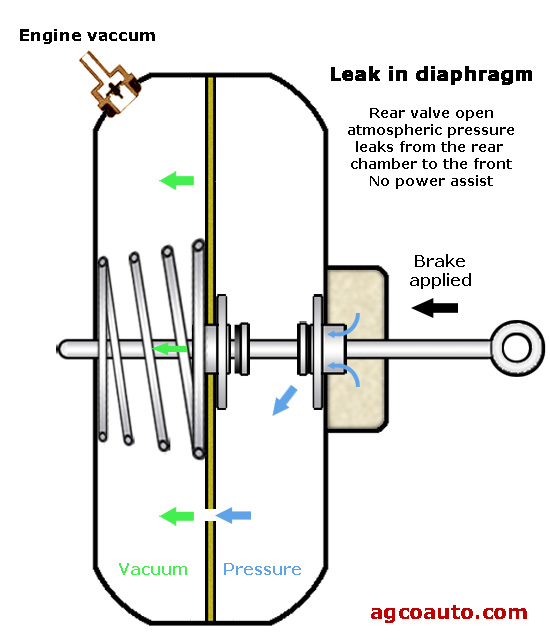
Other brake booster failures include broken springs, ruptured diaphragms and leaking valves. When the diaphragm ruptures, atmospheric pressure leaks through and does not provide power assistance. A broken spring most often causes the brake pedal to not return fully when released. Brake lights staying on, are one possible symptom, and possibly overheated brakes.
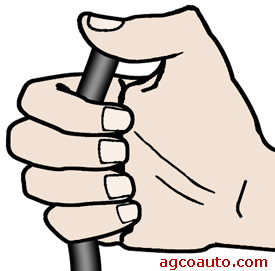
A ruptured diaphragm also allows, atmospheric pressure to enter the intake manifold. This creates a vacuum leak and causes the fuel/air mixture to lean out. Other than hard braking, another symptom is an engine misfire at idle, when we depress the brake pedal. Atmospheric pressure lowers the engine vacuum, by leaking through the diaphragm. It is simple to test for this. We can unplug the hose at the brake booster and block the end with our thumb. If temporarily unplugging the booster and blocking the hose solves the misfire, it shows a leaking booster.
Internal valve failure may result in a lack of braking assist or brakes that do not release, depending on the failure. We most often replace boosters as an assembly as repair in the field is not practical.
Testing the booster
We use a vacuum gauge to check for an adequate vacuum. The vacuum at the brake booster should be around 16-20 inches. Insufficient amounts can result from a restricted source and sometimes engine running problems. For instance a plugged catalytic converter can lower engine vacuum and result in poor brake booster performance. A bad vacuum leak in the intake may also cause a lower vacuum.
A leaking brake booster may also cause an engine to run badly. Leaks in the brake booster provide a vacuum leak to the engine. One quick test for leakage, is to turn the engine off and press the brake pedal. If the pedal still has one or two assisted applications before getting hard to press, likely no leak exists.
Another simple test is to apply the brake pedal several times without the engine running, to exhaust the vacuum. After the pedal becomes hard to push, hold it down and start the engine. A good booster, with an adequate vacuum will cause the pedal to drop slightly. This is because the booster greatly increases pressure applied by the pedal.
Some reasons a vacuum booster fails
When brake boosters fail the reason is often outside the booster itself. For instance a bad master cylinder leaks fluid into the booster. Brake fluid will cause deterioration of the diaphragm resulting in failure. If misdiagnosed, the failed booster can provide a vacuum to the rear of a replacement master cylinder and quickly ruin it, repeating the cycle.
Close inspection of both the booster and the master cylinder is necessary, when a failure occurs. As with most things, careful diagnosis can prevent an expensive rework. Power brakes are no problem, for the professionals at AGCO.
Registered visitors are always invited to leave their comments and thoughts by using the form above. If you need to you can login here or register here.
You can also win a free AGCO coffee cup, by reporting any errors you find, with this form.