Many folks would like to know, how much air pressure is best for their tires. No answer will be correct for everyone as their situations will vary. These guidelines may help find the pressure that works best for you.
Vehicle or tire maker recommendations?
All tire makers list a maximum inflation pressure on the sidewall. The pressure listed on the sidewall is the maximum the tire should hold and NOT a recommended setting. We must never exceed this air pressure. Vehicle manufacturers also specify an air pressure. This is based on the load they design a vehicle to carry. Many sources cite the vehicle recommended pressure as best, but is it?
Tire placard pressure is often much lower than listed on the tire sidewall. Air pressure given by the vehicle maker was based on the tires supplied with the vehicle. They design many newer replacement tires to give a good ride, with much more pressure. Original pressure listed is considered the minimum and the sidewall pressure the maximum. Selecting the best pressure involves considering several factors.
Tire pressure based on the type of application
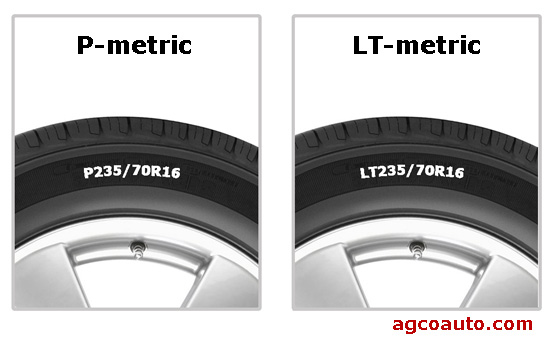
Passenger-car tires and load-rated truck tires require distinct tire inflation practices. With load-rated tires, the size designation does NOT start with a "P." For example, a P245/75R16 is considered a P-metric tire. This is not the same tire as a 245/75R16 Load C tire.
The addition of a load-rating (normally C, D or E for 6, 8 or 10 plies) shows they design this tire to carry a load, as in truck use. The designation on tires, designed for passenger vehicle use, starts with the letter "P." We call this rating system P-metric. P-metric tires are very different from load-rated tires. We need separate procedures for setting air pressure, because they design these tires for different purposes.
Air pressure supports the weight of the vehicle. Engineers determine how much pressure we require to support the vehicle and its load. With passenger vehicles they also consider ride comfort. With less air pressure the vehicle rides more comfortably. Less pressure allows the tire sidewall to flex, which absorbs roughness in the road. This flexing also damages the tire and promotes faster wear.
This is why on passenger cars, the tire placard rating might be considered the minimum. We should never inflate tires to less than this amount. On P-metric tires, the placard pressure is good if ride quality is more a concern than tire life.
On a vehicle with load-rated tires, the maximum load the truck can transport is considered. The listing on the placard is generally a much higher pressure. This number also assumes the proper tire is on the vehicle. For instance, when the vehicle specifies an E-rated (ten plies) tire, the recommended pressure is based on such a tire. Underrated tires are dangerous and over inflating them may make matters even worse. When the maximum pressure listed on the sidewall is lower than the manufacturer's recommendation, something is wrong.
Ride, tire life and fuel mileage
Some tires experience excessive wear with the vehicle manufacturer’s recommended pressure. In such cases, they may base the recommendation too heavily on ride considerations. As tire pressure increases, ride comfort generally decreases. This is because we reduce tire flexing. More pressure may also increase tire life and fuel mileage, up to a point.
Finding the best pressure for your tires
To gain tire life, starting with 10% under the maximum, listed on the sidewall often gives improved tire wear, with a P-metric tire. For example, a tire listed at 44 PSI could start with about 40 PSI. From this point, we can adjust pressure down to the placard rating if ride quality is too harsh.
With a load rated (not P-metric) tire this method may give an extremely harsh ride. On these tires start with the tire placard recommendation and adjust upward until a good compromise is found. In both cases we should never exceed the minimum or maximum specified air pressure.
Tire pressure is always checked when the tires are cold, not after driving a long distance. Driving increases the heat of the air inside the tire and the pressure rises. A heated tire does not reflect an accurate pressure.
The best pressure is that which give the acceptable ride and minimum wear on the tires. Regularly checking tire pressure and watching for tire wear is a good guide.
Proper tire inflation
With proper inflation, wear is even across the entire tread area. With P-metric tires this usually occurs around 10% under the maximum listed on the sidewall. This method may also cause the vehicle to ride a bit more harsh, but may be a good trade off.
Load-rated truck tires should start with the amount listed on the tire placard. More pressure can be added, based on tire wear and the ride, never to exceed minimum nor maximum.
Shoulder wear from under inflation
This type wear is common and caused by under inflation. Both shoulders are worn about the same and far more than the rest of the tire. Air pressure is insufficient to push the center of the tire into full road contact. The shoulders of the tire carry more load and wear prematurely. Using the inflation pressure listed on the tire placard, sometimes results in such wear. Inflation less than listed on the tire placard is dangerous and we should never operate tires below the manufacturer's recommendation.
Wear from over inflation
Excessive wear in the center of the tread, and less on the shoulders suggests over inflation. Over inflation is also dangerous, and we should never exceed the maximum on the sidewall. Moreover, bear in mind that pressure increases with temperature. Tire pressure is checked when the tire is cold, or after allowing it to sit for a few hours. Checking tires immediately after driving will give a different pressure. We must make allowances for temperature, if checking a hot tire is necessary.
Tire gauge accuracy
When checking tire pressure, an accurate tire pressure gauge is necessary. Many commercially available gauges read improperly and do not repeat their readings. High-quality automotive shops will have testing instruments to verify the accuracy of a gauge.
Even with perfect air pressure, tire wear will result from vehicle misalignment. Such wear will generally be on one side of the tread or the other. For more information on wheel alignment, please visit our wheel alignment category.
TPMS and air pressure
With tire pressure monitoring system, raising the air pressure more than specified by the manufacturer may cause the light to come on. On some vehicles programming can reset the range. Other vehicles do not allow changing the specifications. If the vehicle manufacturer supports programming, many shops can reset it.
Registered visitors are always invited to leave their comments and thoughts by using the form above. If you need to you can login here or register here.
You can also win a free AGCO coffee cup, by reporting any errors you find, with this form.